Saturday, 21 January 2017

Unit 2, Part E

21 January 2017
Fiction, our short film, I think on the whole turned out relatively decent. I really enjoyed making this film and think it created the desired effect I aimed for. Overall, through making this film, I've learnt loads from the rest of my crew and our mentors: Meabh O'Donovan, Rosie Thompson, Darren Eagle, and Becky Waters. I have really benefitted from the experiences making this film has given me.
One strength of the short film I think was the story. I think it's really intriguing and worth developing and reshooting in the future. I feel that I could learn from this film Fiction and redo it in a much more effective fashion. How I could improve the story/narrative is by extending the story and allowing more time at the beginning to develop the character of Lewis -making him more nerdy and relatable.
Editing wise, I think I would add more cutaways and close ups to allow the audience to feel the emotions of the actors more. I would also like compose more music (as I composed the music for this film) to put in the middle of the film if possible. However, I did think that the silence in the cafe scene was effective because it made it more awkward between the characters.
There are also some things we could improve upon in cinematography. For example, there was a silly pan down and back up when he was putting away his notebook in his bag. It lingered slightly too long on the top of Lewis's head and looked out of place because the narrative was supposed to be entirely from Lewis's perspective and this was a shot from the POV of Caitlyn. Additionally, as I said before, I would do some more cut aways to defining features of Lewis, in his costume and perhaps to his hands and maybe his feet walking.
I'm incredibly pleased with the experience I've gained from doing this Silver Arts Award, writing Fiction, and collaborating with industry professionals and other students. It's been extremely helpful to grow my network and to learn from these talented people. My single aim in completing this film and arts award was to learn from the people around me and create the very best short film I could manage with my fantastic collaborators. I worked my hardest, and I think I've, with the help of others, achieved these goals.
I can't wait to see how this BFI experience will open doors in the future and how the lessons I've learnt will play out in how I implement and achieve my future aspirations. Incredibly excited for the future thanks to the outcomes of this Silver Arts Award!

Friday, 20 January 2017

Unit 2, Part D

I think that I worked incredibly effectively with the rest of the crew and filled in the gaps where need be without question. There was an unspoken understanding between our crew members and I think that we've really gained respect for each other and what our specialities were during this process. I learnt a lot from them and they learnt from me as well.

In pre-production, I took on a lot, making sure everything was planned correctly so that we would minimise the amount of time we wasted on the shoot day. We had consistent communication over email and Facebook Messenger to make sure that we knew what was going on and everyone was in constant agreement. As I've said before, I wanted to make sure that everyone was okay with how I wrote the script, Fiction, who the characters were and even asked them what they wanted their names to be. I think that I held a good balance between asserting what I thought needed to happen and letting others do what they knew how to do best.

Whenever I made a mistake, which happens sometimes, I made sure to apologise and we would resolve the issue together. Also, if any of the other crew members made a mistake or needed help, I would try my best to resolve the issue. I think that we worked together effectively but didn't neglect the fun in the experience we were having together to be completely serious. I think I had a good balance between getting things done and becoming more than just business partners with the crew, but having fun a lot of fun together. I think this was worth mentioning because it would have been hard to complete the film if we didn't keep the morale up and just have some fun every once in awhile. I've really enjoyed collaborating with these talented people and would love to do it again!

Unit 2, Part C

During my writing process, I was very dedicated to the script Fiction and making sure it was absolutely the best script I could possibly write. Under the time limit of one shooting day, it had to be a concise and interesting story. One of my goals was to avoid people clicking away from this short film if they saw it on YouTube or some other platform. I understand the incredible weight that comes with being in charge of the story behind the film and I wanted to write it to perfection.

Additionally, I had a huge part in helping the rest of the crew out and filling the any gaps we had. It seems I took part in almost every role of the film and though I still let everyone be the leader of their own role per se, I wanted to help them out if I could. By the end of it all, I had helped out a little bit in art direction, editing, and production in general.

On the actual shoot day, I was a runner and kind of the person who they asked for a second opinion on certain shots. This was fun because as a runner, I looked after the props and made sure the actors were warm and fed. But as the third or fourth pair of eyes on set, it was good to be asked for my opinion and be able to veto some shots that seemed a bit risky or suggest shots that weren't thought of before so that we'd have options when editing later.

This goes to show what the diversity of one's role can be on a short film and how just being the screenplay writer can expand into something much more when you don't have a huge crew (ours was five people in total). I think that I fulfilled my arts leadership role effectively and helped out the other crew members as best as I could when they needed it. One of my goals in doing BFI was to learn from the specialists around me -the people and students who were better at one thing than I was, and I think in doing this, it has made it easier to help fill in the gaps where I needed to. Now, I feel like a more well-rounded individual, who could fill any role if I need be, because I learnt so much from my crew and this experience. 
\
Here's me giving the "go" signal to our director, Ben, inside -who was going to tell our actors to start talking:

Here's me taking a look at the camera angle we were using in the cafe scene:

Here's a picture of our actress and my crew, looking for the approval of our director, Ben: 

Unit 2, Part B

14 January 2015

Whilst I was writing our script, I had to make sure that what I was writing was practical to shoot in less than a day. One sequence we had in the original script was a montage; it took place in many locations and had the actors wearing multiple costumes. However, with guidance from our mentors, we were told that shooting something like this in a day would be impractical if we also wanted time to shoot the other scenes. We resolved this particular problem by removing the montage, and changing the relationship of Lewis and Caitlyn to take place over a day rather than months or years. 

Once I had written our script, we had to think about getting props, what type of costumes we wanted the characters to wear, and gaining access to locations. I personally made some notes regarding this process, and had a hand in asking permission to use the Sheffield Central Library to shoot some scenes in at the beginning. 


Since we were shooting in a library, we also had to think about when we were shooting close ups of books, that we weren't causing any copyright problems by mentioning real book names and authors. To resolve this problem we opted to create a few fake books, to put on a shelf, when we were taking close ups. I volunteered to figure out how we were going to make these fake books. 

What I ended up doing was photoshopping some of my own photos and using our names and, with permission, some of my other friends' names as authors. Then, I printed off the "spines" of these fake books, folded the paper to make it seem like they were covering books, and taped them all to together in the back. Lastly, I attached them to a metal frame that I twisted out of wire. Here's what it looked like in the end: 


Unit 1, Part B- Entry 6

18 January 2017

Recently, I did an entry in my inspiration notebook that focuses solely on storyboarding because being a storyboard artist is an incredibly important role in the art department of a film. Directors or cinematographers can be the ones to draw the storyboards, but oftentimes, storyboarding is an entirely separate job. Perhaps this is because of the weight this role holds -visually displaying to the entire crew what exactly is going to happen on the screen.

Storyboarding is essential to pre-production, and successful filmmaking, because it allows for filmmakers to have discussion based on a visual plan -and most filmmakers are very visual people. Once a storyboard is made, changes can be made, based on this plan, during the shooting process. Storyboarding is very useful for the entire cast and crew to create a meaningful and powerful sequence.

In my inspiration notebook, I've gathered some storyboarding examples from some films that I enjoy. It was interesting for me to see the diversity in the styles that the storyboard artists use; this goes to show that anyone can storyboard and they don't have to be meticulously detailed all the time. However, on the other hand, the detailed and colourful storyboards are incredibly inspiring, and I can imagine they moved or inspired the rest of the crew before they even started shooting. I think it's amazing that there is this much diversity in these storyboards and it has challenged me to think of ways I can develop my own storyboarding style in the future.

Friday, 13 January 2017

Unit 2, Part A

13 January 2017

My leadership role within this project (creating a short film in collaboration with other BFI Academy students), was to write and edit a screenplay/script that we could film.

My aim in writing the script for this short film was to improve my writing skills through fulfilling the advice given to us from the speakers and instructions and edits given to us. Before, I've always just written scripts for school or my friends and I've been able to be quite free in how I write and wouldn't even plan -I would just go for it. This was a different experience for me because of the planning, and the fact that a film would actually be produced from the script I wrote. My aim was to make sure that it was a professional script because BFI is a program where we, as students, are learning to work in a professional environment.

This role required lots of pre-planning before writing the script. Besides coming up with the actual ideas for the story, I had to make sure that my whole group was on board with the ideas and that they felt like they had a part in the production of the script. It seemed important for my group to feel that they had some ownership of the story, as I certainly felt I did at the end of the script writing process. So before I even wrote the script, I made sure that I had the full support of my team members in making some of the decisions. Here are some earlier screenshots of our conversations:


On the first Saturday of BFI, we were very lucky to have a speaker called Rebecca Mark-Lawson come and talk to us about creating scripts specific to short films. I took extensive notes during this class in order to better prepare for the task ahead of me. Although I have written scripts before, I wanted to make sure that I did this one the right way. The biggest thing that I took away from this "master class", as she called it, is that simplicity is key; when writing my script, I tried as hard as possible to implement this idea and keep in mind the format of the film. The fact that this is a short film, not a feature film, really affected the tone of the story and kept any elaboration I desired to touch on to a minimum. Here are the notes I took during this talk:


This talk also inspired me to create complete project plans and to do some further research on stories before wrote one. Here are some pictures of these plans and some notes that I made from a YouTube clip:


Also, I decided to make a PowerPoint based off the notes that I took, so that I could have something to reference every time that I write a script in the future. I really wanted to make sure that in doing this course, I didn't forget what I learnt. Hence why I've taken so many notes and created this PowerPoint:


Another mentor who had a huge role in helping me develop the script was Caroline Cooper-Charles. She asked me how I could make the main character, Lewis, more personal to the audience and talked about how his actions could portray him as a more likable guy. Her feedback really helped me to develop the second draft of my script.


Unit 1, Part B- Entry 5

13 January 2017

Over this past week, I've been noticing the importance of props -and how props relate to the words quality and quantity.

In films, oftentimes props are not noticed unless they frequent the screen multiple times. The more times a prop is shown, the more the audience is expected to notice said prop. For example, in the film Dirty Pretty Things (2002), directed by Stephen Frears, the number of times clocks (or watches) and mirrors are shown on the screen is absolutely immense. The production designer of this film is Rebecca Holmes.

I've seen this film a few times, and perhaps my second time watching it, I started to notice this trend and I was absolutely fascinated by it. It's beautiful how something like a prop can increase the quality of a film because it clarifies the themes being explored inside the film.  The prop itself increases in quality because a story and a meaning is attached to that prop through the film -it would not be shown in extreme close up if it was not important. Additionally, the quantity, or the number of times these props were on the screen increased the quality of the themes and emotions being expressed.

In this case, the themes being discussed were: morality, time, and identity. Okwe, the main protagonist reaches many points throughout the story where he must consult his identity to make ethical decisions. The problem with this however, was that he didn't know who he was -only what people thought of him. The entire film he never looked in the mirror, he had to figure this out for himself. Time also, seems to grab ahold of Okwe, forcing him to consider things he never thought of before; the clocks and the mirrors both have a ring of light around them seeming to represent purity, found over time and in the actions of the characters who looked in the mirror. Although the characters did things that were wrong and time often seemed to be against them, in the end their identities and lives were redeemed, suggesting this idea of purity and rebirth.


Friday, 6 January 2017

Unit 1, Part B- Entry 4

3 January 2017

Today, I did an entry on The Hunger Games trilogy because I've always liked the mise-en-scene in these films. Unlike most films, that I usually like for their story or their main character, these films I think lacked in these areas. However, I think they were outstanding when it came to creating a look and a style for their characters and their settings...I mean half of the story was about appearance and making Katniss look like the Mockingjay -the heroine.

There are literally hundreds of makeup artists and artists in the art department credited with working on the Hunger Games series...I was going to try and count how many on the IMDB list, but there's just way too many! This goes to show that collaboration is entirely necessary, especially on a franchise as big as The Hunger Games.

There's so many different little jobs within the arts department itself: hair stylist, dental effects design, makeup artist, conceptual designer, set designer, set decoration buyer, welder, propmaker, etc. I've been learning lately that it's all about finding your niche and then finding your niche again and again and again. In order to stand out, you've got to keep specialising, until you've become a master at something no one else can do better.


Unit 1, Part B - Entry 3

29 December 2016

Donnie Darko (2001), written and directed by Richard Kelly, has recently become one of my all-time favourites. I like the level of intellectual suspense it gives and the complexity of the storyline.

This film has a perfect example of a character that would be nothing without its costume -Frank, the bunny. Frank, unbeknownst to Donnie, is actually what we call a "manipulated dead" whose sole purpose is to guide Donnie through the steps he needs to take to save the world from disaster.

Frank, who is actually a human, has a very particular bunny costume on. In the right lighting, the mask of this costume is very grotesque and can make the audience feel very on edge. Often, there will be long takes of the mask, staring at the audience (almost breaking the fourth wall with its horrible bulging eyes), that force the audience to stare back. The very accomplished and award winning costume designer who made this is called April Ferry; she has also worked on some more recent costume designs for Game of Thrones.


Unit 1, Part B - Entry 2

23 December 2016

Today, I looked a little bit more at the Star Wars franchises (Rogue One and The Force Awakens), but also at bits of Alien (1979) and The Hunger Games very briefly.

I had noticed that all of the costumes of these female protagonists were similar and I think, this was brought on by Alien. Alien is an extremely influential film because it was one of the first to have a strong female lead and it was also led the way for hybrid-genre films (it being both a horror and a sci-fi film).

One thing that I like about Rey's costume (from The Force Awakens) is that it is mainly cream coloured, rather than the generic brown/greens pilot-looking costume of the other female characters. This convention probably was derived from Ellen Ripley's costume ( and British production designer, Michael Seymour). It goes to show that a generic convention of female sci-fi/ futuristic films is their costuming, but that these conventions can be changed and evolved as time also evolves.

I really respect the production designers and costume designers that developed these costumes and really like learning about them and seeing their brilliant concepts being executed. It's amazing to see the translation of their drawings onto the screen; I can only imagine how it would feel to have your designed work out in the world for all to see and admire!


Unit 1, Part B- Entry 1

17 December 2016

This week I went to see Rogue One: A Star Wars Story. I really love this franchise and this film in particular inspired me so much that I decided to do some research on the Star Wars pre-production processes in general. To hear more about what I thought of this film, see the film review I did in Section C!

Here are the entries that I did in my inspiration notebook:


Darth Vader is my favourite Star Wars character for some odd reason; he's intimidating, powerful, and evil... and I really love how this translates into his costume. Recently, I've learnt that good costume can make a character, as it has done with Darth Vader, and this is why pre-production is so important in the long run.

I did a sketch of the concept art developed by Ralph McQuarrie for Darth Vader's helmet and was fascinated by how much it looks like the head of a bug or a skeleton of some sort. It was really cool for me to see and start to understand the development of the great antagonist himself.


Unit 1, Part C- Rogue One Review


Image result for rogue one poster
starwars.com
Recently, I saw the film Rogue One: A Star Wars Story (2016), directed by English filmmaker Gareth Edwards at the Showroom Cinema in Sheffield. Overall, I was incredibly impressed with this film. The storyline was fantastic, the characters intriguing, the mise-en-scene fabulous, and the acting convincing. Additionally, I thought the editing was smooth and the cinematography breathtaking at times. With a little bit of research I found out, Gareth Edwards not only is a director, but a producer, screenwriter, cinematographer, production designer, and visual effects artist. Having someone with so many talents and backgrounds seems to have affected this Star Wars story in a unique way.


A true storyteller and listener myself, I was incredibly pleased with the story, as I found it really interesting. Film can bring so much to story and show people a whole new perspective, but this story had two sides to it. One side of the story was Jyn Erso’s past, which we only saw a little bit of in flashbacks and the opening sequence of the film and the other side was what we saw played out visually. I particularly enjoyed the fact that they concealed the space of time between Jyn’s childhood and the present because it made her such a mysterious character...we didn’t know whether to trust her or not. It begged the questions: why is she this way? Who did this to her? And overall, what has happened in between?


I also thought that the woman who played Jyn, Felicity Jones, was very good at portraying that character and convincing. It kind of reminded me of a Jennifer Lawrence type of performance (similar to how she played Katniss in The Hunger Games trilogy) where she starts out really stone faced and it tends to take a while for the character to warm up to the situation around her; this was very suited to the character herself and the trust issues Jyn seemed to have -being constantly left behind. The one thing that I wish that they had done to develop her character a bit more would be to focus a bit more on the present version of her before jumping straight into what needed to happen to have the plot move forward. Literally all we knew about her before they started their mission was who her parents were, that they had abandoned her with Saw Gerrera, and she had been a prisoner of The Empire.  


I personally have to watch a film a few times before noticing editing and I don’t always notice cinematography unless I’m looking for it or it’s an incredibly pleasing pan of a location. However, when I’m watching terrible films, it becomes clear how important it is to get the editing right. I thought that generally, the pacing and shots were good and that there were no notable continuity errors. I thought that the lighting throughout was quite good, but it was really noticeable on the very last planet that it was very bright and it seemed more like T. V. lighting for some reason. Since this location was part of The Empire’s territory, I would think that it would have darker lighting or some sort of effect that would make it seem hazy, rather than bright and white. On the other hand, this could suggest the redemption that the rebel alliance felt at the end of the film, as usually whiteness is associated with purity and some sort of redemption (for example, in The Shawshank Redemption, the film ends in a very white and bright location).  


The mise-en-scene in this film was what impressed me the most: stunning locations-what I think may be the some of the most beautiful Star Wars locations in history in my opinion, some impressive costumes, and really cool props as per usual (e.g. Darth’s saber, guns, bows). Also, I really enjoyed the special effects and the correct usage of CGI in this film. K2-SO has become my favourite Star Wars robot, he was just instantly likeable and has a good sense of humour, and literally no one could really tell he was a CGI robot.


Everything about this film made me want to see more of these characters and the ending, I will not say it just in case, made me incredibly sad. I prefer these characters over the characters in The Force Awakens and the storyline as well. As a newer Star Wars fan, only about two years a fan, I prefer this film to the rest of the films in the franchise. Although I really love The Empire Strikes Back and A New Hope, I think I was entertained by this film the most.  I would definitely recommend this film to anyone who enjoys action and sci-fi films, and loves a good story with an amazing set of characters.

Watching this film in The Showroom created a unique atmosphere that I would not have experienced if I had watched it on my own. Seeing this film on the big screen definitely attributed to my love of this film and allowed to me pick out small details I may not have seen if I watched it at home on a smaller screen. It also allowed for a full immersion into the story that that I may not have had if I watched it at home and had my family talking over me and asking what was going on.


Unit 1, Part C- I Daniel Blake Review


Image result for I daniel blake poster
This Poster is from IMP Awards

I Daniel Blake, directed by Ken Loach-  an influential director with a passion to expose the problems in some modern systems and show the stark realities of life - was outstanding. This particular film aimed to show how the hierarchy of the welfare system can affect the vulnerable and I think it did just that. I’d never seen anything like it before and was incredibly impressed by the impact it created and the story it told.


In general, I really enjoyed the docu-style type of cinematography and feel. There were more long takes, close ups, and many times where we just saw Daniel’s face and felt his emotions. I thought that this was really effective in helping the audience feel his pain and understand what he was feeling -utter distress at times. Literally the only thing that I can think of that I didn’t like about the film was the weird black outs that came in between almost every scene. I didn’t really understand why they would put black outs when they could’ve just gone on to the next scene...perhaps they were there to let the audience think a little about what’s just gone on or maybe to make the audience think of the beginning of the film when all we could hear was Daniel’s voice and see a blank, black, screen?


I did however, really like the mise-en-scene. I noticed it had a pretty plain colour palette of light blues, whites, greys, and beige (with some green as well). I thought that this was really effective in making the audience believe it was a true story because in England, everything seems to have a more grey tinge to it (considering it’s always cloudy). It also reflected the atmosphere of the film, where people didn’t feel noticed or important. If everything is grey and costumes blend into the background, no one stands out.


I was also really impressed with the actor who played Daniel Blake, Dave Johns. I’ve never seen him in anything else before, and I think this was his first film. Considering this, I think that he did incredibly well and was very convincing. No spoilers but, so many people around me were crying at the end of the film! He truly was Daniel Blake himself, through and through. I was equally happy with the girl who played Katie, Hayley Squires, whose story legitimately almost made me want to cry more than Daniel’s story. Her acting was terribly convincing and beautiful; I felt so sick for her and her children having to go through what they did to survive.


This film truly astounded me beyond belief and has made me want to watch more films that are similar to it. I am in love with films that make me think and this film made me thankful for the opportunities that I have and the supportive people I have around me. I learnt a lot from this film about the welfare system, which I honestly was unaware of as a problem beforehand...this means that Ken Loach has achieved his aim of making people aware and connected to problems such as these. If people feel connected, they feel inspired to change the problem.

This is part of why I preferred watching this film in a cinema rather than at home by myself. The atmosphere created by watching it with others, and hearing their audible reactions (gasps and crying, etc.), really made me realise how relevant this problem is to everyday people. It opened my eyes to feel everyone's reactions and I would not have had the same experience if I had watched it alone, or even, just at home with my parents.

Unit 1, Part D- The Showroom

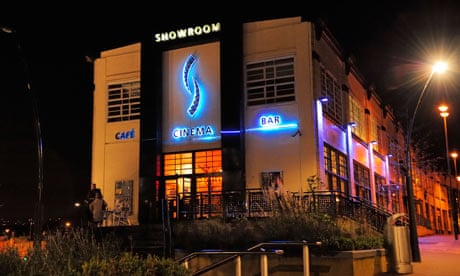
Image result for the showroom cinema sheffield
This image is by The Guardian

Located in the heart of Sheffield, inside a renovated 1930’s car showroom, The Showroom Cinema is a successful and welcoming environment, where you can watch both obscure and some mainstream films. From my experience of The Showroom as customer, before I even did BFI, I could sense that it was an environment for filmmakers to learn from others through the films that they watched and this has always made The Showroom have a professional atmosphere, but this is why I appreciate it.


Additionally, The Showroom Workstation, involves about “60 film businesses” and it is Sheffield’s leading hub for creative and digital industries. It’s in this location you can attend talks and congregate with other filmmakers, rent a production office, hire a screen, or even film. It’s an incredibly creative and uplifting environment where you can just get down, and get things done in the company of others, doing the same exact thing. They have a very wide network or community of people that work in the Workstation: from architecture to photography, you name it -they got it.


The Showroom partners with many different organisations, such as Creative England, and universities, such as Sheffield Hallam. However, by far the partnership that has benefited me the most is its partnership with the British Film Institute. I’ve learnt so much from being on this course, meeting other students that are interested in going into the film industry, and learning from industry professionals through the many workshops that BFI has put on for us.


One workshop, put on by Rebecca Mark- Lawson, I found to be incredibly helpful because for the short film that we did, I was the screenplay writer. Her workshop was all about making simple, yet successful, short films. Not only did she tell us how to think about fabricating the story itself but how to play to our strengths and turn our limitations into something good. Another workshop, that I found particularly inspiring, was a talk  by Rachel Tunnard, who was there to talk to us about a little bit of everything, but mostly writing and directing. I found what she said about writing to be very practical and interesting, and was very pleased that she gave us some ideas about where our careers could take us in the future. She, and a lot of the other speakers, gave us an incredible amount of resources that I’m super excited to use in the future.


Another workshop, that I actually found the most unusual and intriguing, was a workshop about production design. It actually was what inspired me to do my arts award on production design and mise-en-scene because it really made me think about how important it is to have someone thinking about the visual quality of what you are seeing on the screen. The production designer’s role is so widespread as well, from pre-production to post-production, and it really drew me in because if I had a role like this one, I would be in partial control of how everything looked. I’ve realised now the importance of the little things -a good prop, costume, set, or location can change the face of a film or an amazing, well drawn out, storyboard could change how people visualise what’s going to be translated to the screen. I want to be an enabler for great films to be made and I think that art direction may be a path I want to explore further.


Overall, I’ve benefited a lot from this course and the direction of the people who run it and run the workshops. Everything that I’ve learnt about the film industry on this course will stick with me for years to come. It’s a privilege to say that I’ve had this experience and it has definitely been an indicator that I want to continue to strive after this career path.

Unit 1, Part B -Plan

26 November 2016

My plan to execute this my chosen arts award is to every other week, or whenever I find something extremely interesting that I'll want to remember, I'm going to add something to my production design inspiration notebook. Literally every workshop speaker, that has come to speak to us on this BFI course, has told us to start a notebook with what we're inspired by to help fuel our creativity. 

I think that this will be an extremely effective way of presenting my BFI award as well because it's something that I can continue adding to after this course is finished, and have something that is constantly with me if I need it because I suddenly get an idea. 

Today I added the first pages to my notebook:


I wanted a page that could show what some of my favourite films are currently so that I could see how my tastes change, if they change, over time. Additionally, I wanted to visualise all of these posters together because I wanted to be inspired by these films that I like, to research some of them and to create art that is similar to the art in these films.

I also wanted to create a page that I could refer back to, to try and distinguish between the different roles within the arts departments of films. Whilst these are all roles I'm going to explore a little bit, I think that it's important to distinguish who does what and sometimes I have trouble doing that because the entire film seems like art to me!